
What you eat
Food
Fuel for every cell. You already count greens, protein and water.
Your body clock even decides when food is best digested — and light sets that clock.
Ocutune for you · concept
Everyone knows the healthy basics. But there's a fourth one nobody tracks — and your body runs on it.
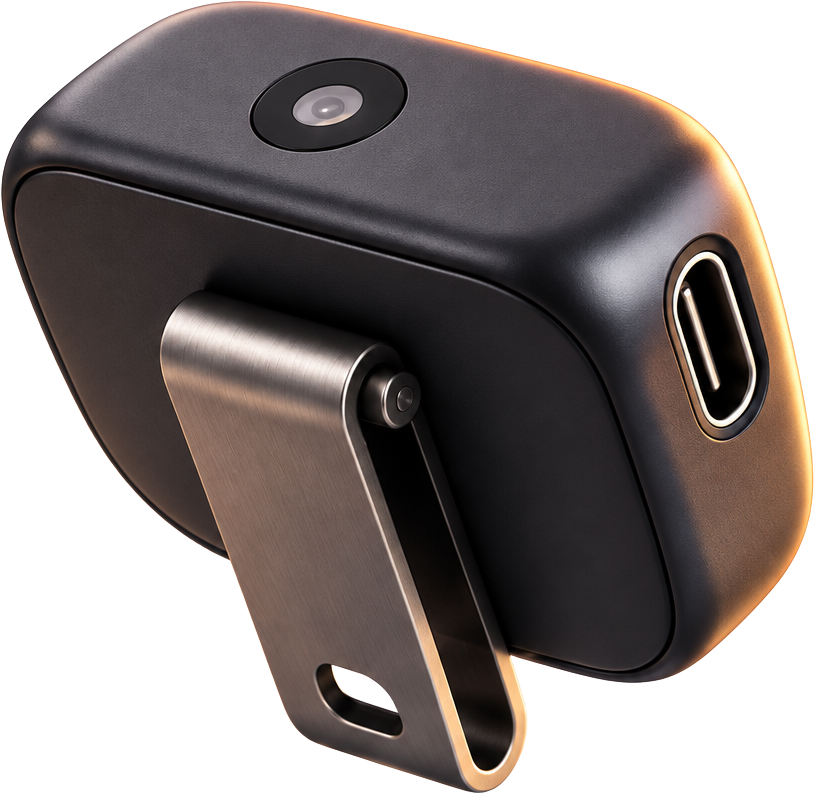 Clip it on
Four legs on the chair
The fitness wave taught us to count steps, macros and hours of sleep. Light is the fourth leg — just as important, and the one nobody measures. Take it away and the chair wobbles.
What you eat
Fuel for every cell. You already count greens, protein and water.
Your body clock even decides when food is best digested — and light sets that clock.
How you move
Strength, heart and energy. You count steps, runs and rings.
Train outside in the morning and you get your best light of the day at the same time.
How you recover
Repair, memory and mood. You track your hours and your deep sleep.
Bright days and dark evenings make it easier to fall asleep — and to sleep well.
What your eyes take in
The signal that tells your body when it's day and when it's night.
Too little by day or too much at night — and the other three legs work harder for less.
It sets your body clock
Light reaching your eyes is the strongest signal your internal clock has. It decides when you feel awake and when you get sleepy.
It powers your day
Bright, blue-rich daylight supports alertness, focus and mood. Most of us spend most of the day indoors, with far less light than the body expects.
It protects your night
Bright light in the late evening tells your body it's still day. Warm, dim light lets sleep come on its own.
Based on the expert consensus in Brown et al. (2022), PLOS Biology. Not medical advice.
Bright daytime light keeps your body clock sharp — so you train, recover and perform when it counts.
Lots of light by day, little at night. Blue phone light in bed is just the tiny part — the other 23 hours of light around you matter far more.
Grey winters, dark offices, bright bedrooms. Your mood notices. Now you can too.
Light is more than lux. Cool, blue-rich light wakes you up. Warm, low light lets you land. Timing is everything.
Measure where you are. Control where you live. Nudges where you look.

Wearable
Clips on your collar and sees the light your eyes see — at home, in the office, on the way. Keep it visible: if it's covered, AI fills in from your location and the weather forecast.
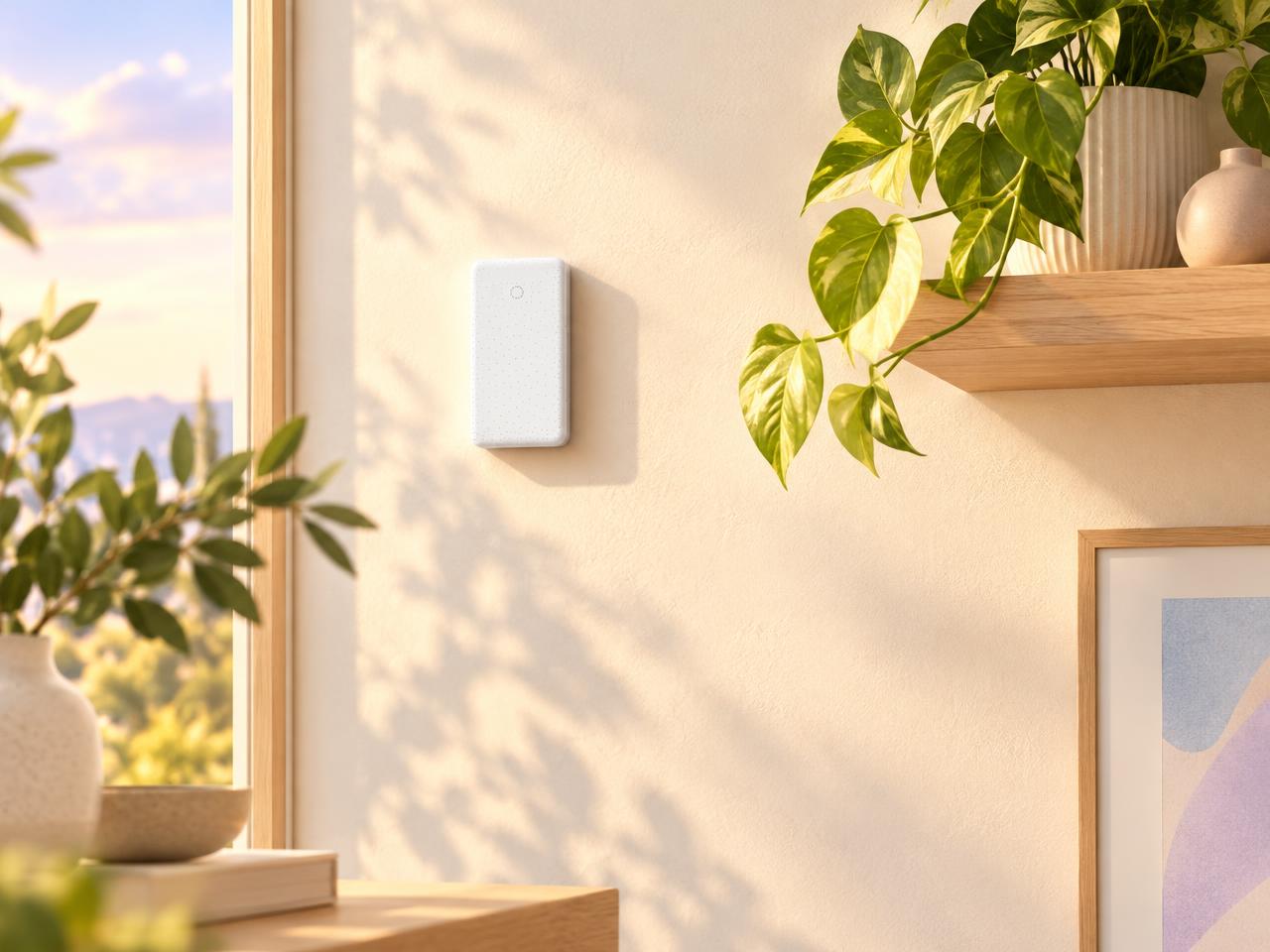
Home wall sensor
Sits on the wall and talks to your smart lights. Bright and cool when you need a boost, warm and low when it's time to land.
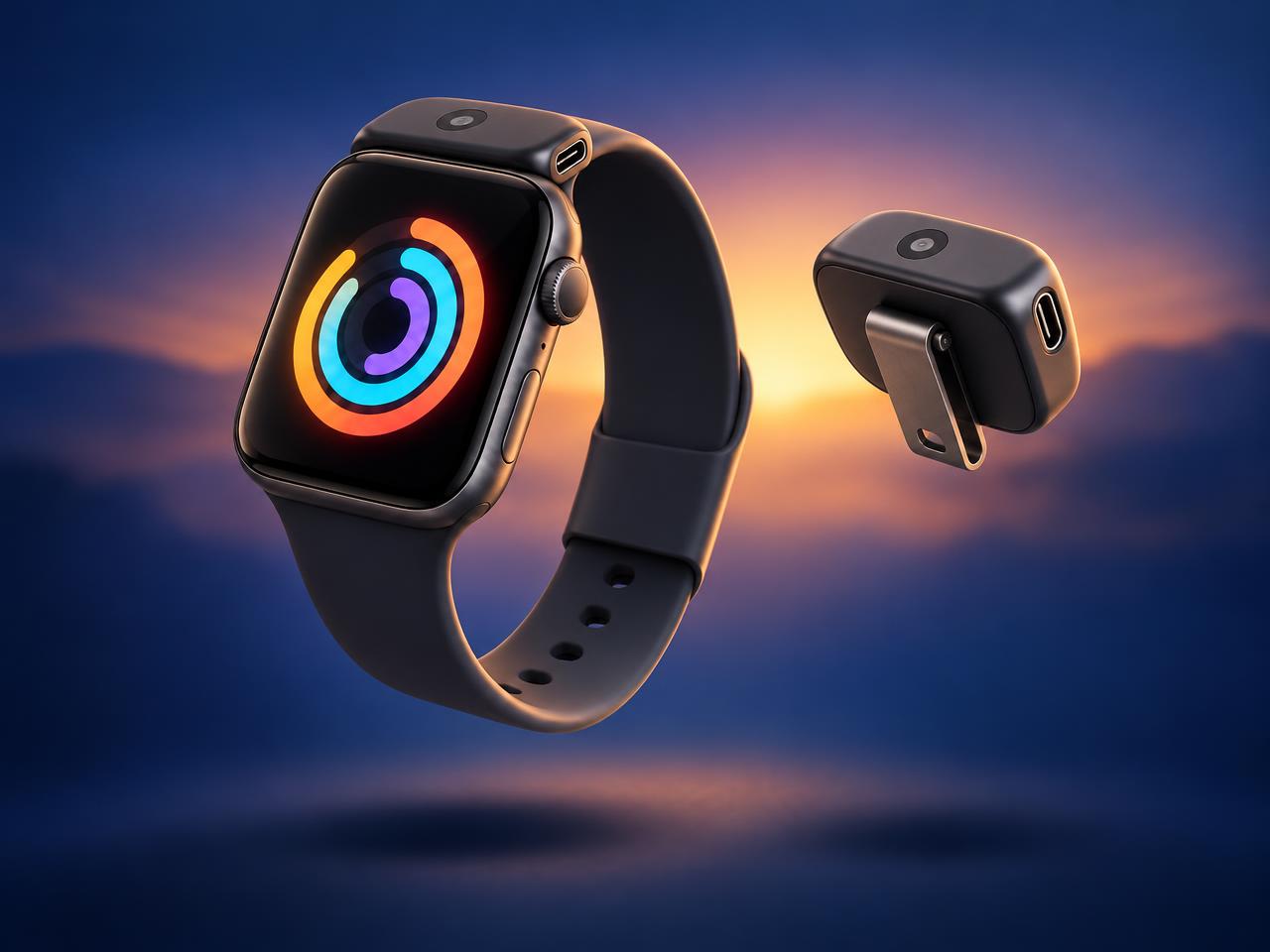
Watch + sensor
A sensor made for Apple Watch: it sits on the strap just above the face, as wide and slim as the watch itself, and charges by USB-C. The sensor measures, the watch shows and nudges.
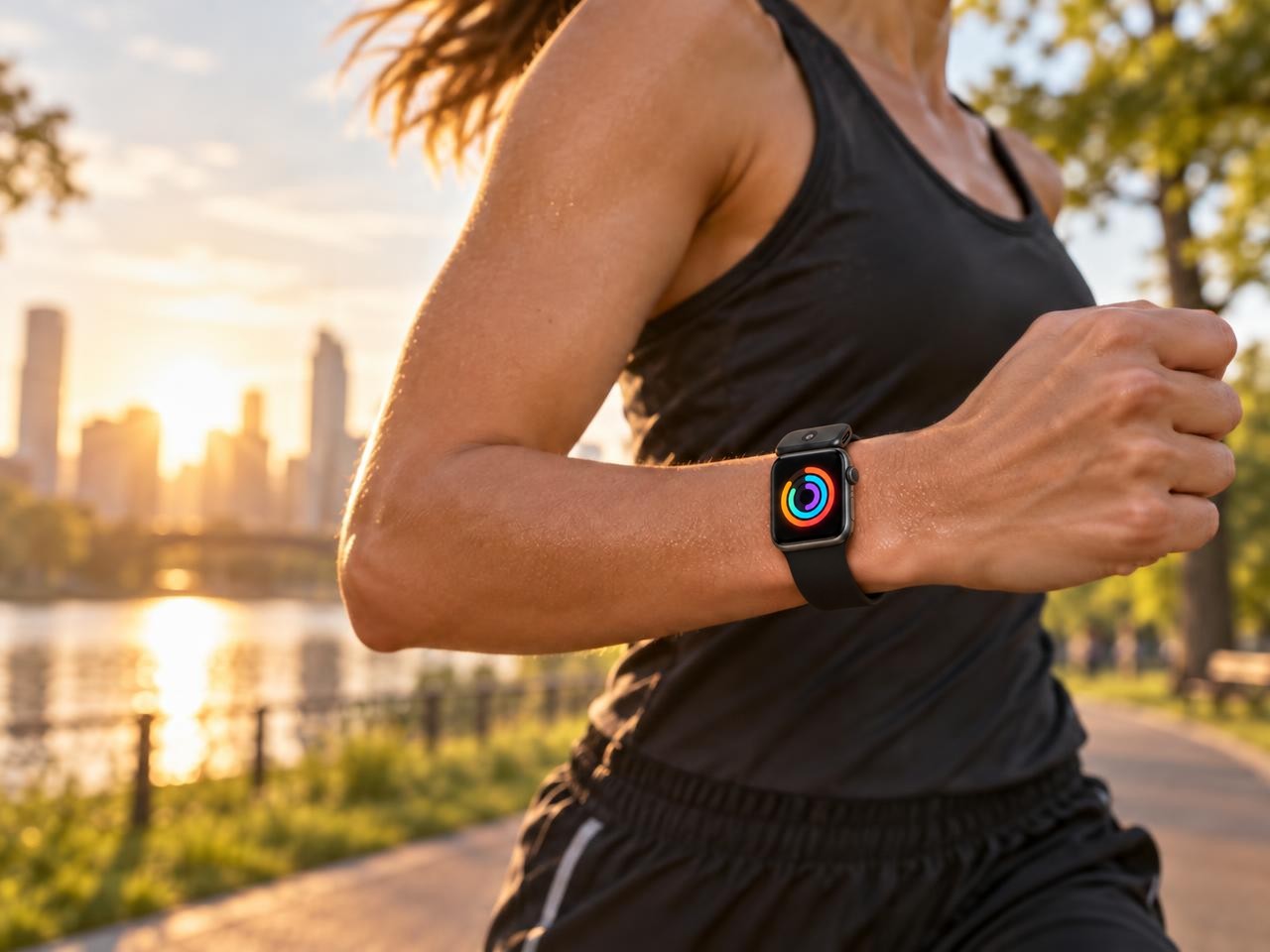
Read the article · 4 min
Why 20 minutes outside in the morning beats any lamp — and how that light sets your sleep, mood and training. Plus: what happens when your sensor is covered, and how AI fills the gap from your location and the weather.
Read the articleLike a food plan — but for light. Built around when you wake up and when you go to bed.
00–07
Sleep
≤ 1 lx
Dark room. Blackout wins.
07–10
Morning boost
Outside if you can
The most powerful light of the day.
10–16
Daytime
≥ 250 lx
Bright, blue-rich, by a window.
16–20
Easing off
Softer & warmer
Let the day fade out.
20–23
Wind-down
≤ 10 lx
Warm, low, screens down.
23–24
Lights out
≤ 1 lx
lx = melanopic light at your eyes. Targets from Brown et al. (2022), PLOS Biology — recommendations for daytime, evening and night-time indoor light exposure .
Melanopic EDI at the eye · 24 h
Maja's Tuesday against her own week and month — and what to aim for today.
08:00
morning · move over the chart
Ideal250 lx
30-day average170 lx
7-day average150 lx
Recommended today350 lx
Today130 lx
58%
Today's daytime budget
72%
7-day average
78%
30-day average
3 of 3 h
Wind-down too bright today
Dim after 20:00
Your evenings have been too bright 100% of the wind-down hours. Warm, low light and screens down tonight.
Life mode · one app, two looks
Under the hood: research-grade spectral measurement. On your screen: rings, tips and a nudge when it matters. Switch to Work (top of the page) to see it at the office.
Set a weekly calendar in the app and it switches by itself — e.g. Mon–Fri Work, Sat–Sun Life & sport.
1Set up in a minute
Wake-up, bedtime, chronotype. Pair OcuWEAR, OcuROOM, your watch and Apple Health.
2Today at a glance
Three rings: daytime light, morning on time, dark sleep. Plus where you are right now.
3Forecast
Weather + your calendar = tomorrow's light plan. Know when the sun's on your side.
4Go for a walk
Behind on light and it's nice out? You'll hear about it — at the right moment, not all day.
5Wind-down + guests mode
Your home dims and warms before bed. Friends over? Flip 'Guests tonight' and we back off. Busy day? Tap 'Not today ✌️'. Try it.
6Stats, any zoom
Hour, day, week, month, quarter, year and 1+ years — % of the light you needed vs. what you got, and how you're improving. Tap the tabs.
7Ideal vs. you
Your curve on top of the ideal. See exactly where the day went dim — and where the evening got too bright.
8Community
Challenges, streaks and a light crew. Morning light is easier with friends.
9Apple Health & more
Sleep, steps, HRV and mood next to your light — so you see what it does for you.
You vs. the ideal — over time
It's not only how much light you get, but when. Most of us get too little in the morning, at midday and in the afternoon — and too much late in the evening. Here's how it adds up.
This week · when you got your light
Accumulated light per part of the day, vs. the ideal.
Morning
Too little
Midday
On target
Afternoon
On target
Early evening
On target
Late evening
Too much
Melanopic light at the eye, added up over each part of the day (lx·h) and compared with the ideal from Brown et al. 2022. Late evening has a limit, not a target.
It adds up
You got 74% of the daylight your body needed this week.
You (running total) Ideal Light debt
−18 h
of daylight-level light missing this week
+9 h
of too-bright evening this week
+8 pts vs. last week. Weekends outdoors = your best days.
Ocutune Plus — your full light history.
Quarter, year and 1+ year trendsMonthly and yearly light reportsWinter plan from your own historyKeep scrolling · the scientific view
28 days, 24 hours, one square per hour. Each square is the light at your eyes compared with what your body needed in that hour. Weekday mornings stay cool and blue. Weekends outdoors light up. Late evenings burn red.
Melanopic EDI (CIE S 026) ÷ hourly ideal · ideal ≥ 250 lx by day, ≤ 10 lx in the last 3 h before bed, ≤ 1 lx asleep · illustrative data
Made for the watch: the light sensor sits on the strap just above the face, facing the sky — as wide and as slim as the watch, charged by USB-C. It measures. The watch shows, nudges and listens.
The watch tells you
Light rings
Today's light next to your activity rings — always one glance away.
Right now
Lux and colour of the light you're in, and whether it's good for focus or for winding down.
Nudges
Go for a walk. Dim the lights. TV off soon? Only when it matters.
Morning recap
How dark your night was and the light plan for today.
You tell the watch
Not today ✌️
One tap pauses every nudge — for an hour, tonight or the rest of the day.
Guests mode
Friends over? Lights stay cosy and the app stays quiet.
Check-in
Tap how your energy feels. Over time we learn what light does for you.
Control
Start a walk, set your bedtime, or switch your home lights to a scene.
Every curve, every room, every device — and how your light lines up with your sleep. From one day to five years.
Be one of the first to get your light right. We'll let you know when Ocutune for you launches.
Join the waitlistConcept preview. App screens, names and numbers are illustrative — not real user data, and not medical advice.